• Skip to main content
  • Skip to footer

Chastity

Promoting the Virtue of Chastity

  • join
  • GET answers
    • DATING
    • Marriage & Family
    • Porn, etc.
    • LGBTQ
    • Birth Control & STDs
    • Starting Over
    • Italiano
    • Español
    • Português
  • Courses
  • Store
    • Bulk
    • Books
    • Audiobooks
    • Booklets
    • CDs
    • DVDs
    • Curriculum
    • Commitment Cards, etc
    • App
  • Events
    • All Events
    • JP2 Trails Retreats
    • Purified
    • SPEAKERS
    • VIRTUAL SEMINARS
  • Donate
  • listen to the podcast

Lindsey Todd

December 28, 2020 By Lindsey Todd

Are you free to love?

One of my favorite lines in any movie I’ve ever watched comes from Disney’s live action Beauty and the Beast. Belle has been living in captivity in the Beast’s castle for months, and after establishing a sort of friendship, the Beast finally asks Belle—in a rare moment of consideration—whether she thinks she could ever be happy with him there. Belle responds simply: “Can anyone really be happy if they aren’t free?” This question is the catalyst that forces the Beast to rethink Belle’s captivity, and he ultimately decides that the best (and only) way to love her is to let her go, even at extreme personal cost.

This cinematic moment carries all the weight and emotional resonance of truth. In real life, authentic love cannot be forced or contrived. True love requires freedom. So why do we settle for enslavement when Christ has bought our liberation?

I am, of course, speaking about the consequences of sexual sin, the roots of which inhibit our ability to freely choose another based on shared goals, values, and virtues. I am speaking to every young adult out there who has grappled with, or perhaps is still struggling with, the temptation of premarital sex.

Maybe in the moment, it feels as though you are free. In the moment, you can convince yourself of almost anything; your feelings may be so overwhelming and powerful for your partner that you are almost capable of justifying whatever sin occurs within your relationship. But let me speak to something more powerful: chastity is more, so much more, than mere abstinence. In fact, I’d go so far as to say that abstinence as a social construct is archaic and, in many cases, disordered without chastity at its core. After all, I’m sure we’ve all heard the age-old saying, “Why buy the cow when you can get the milk free?” This is hardly a convincing argument for young adults today, who experience far less cultural judgment than our grandparents did. Women in the 1940s had to worry about preserving their reputation—and I’d go so far as to say that “reputation” doesn’t exist today as it once did. Today, anyone can get away with anything on the grounds that it’s their own version of the truth. Truth is no longer valued as objective or absolute, so why practice abstinence if it’s no longer a cultural expectation? Indeed, why practice it if the culture expects the exact opposite from you?

The difference between abstinence and chastity? Chastity encourages and makes possible the freedom to choose, and the freedom to love. When chastity exists in a relationship, each person is living out God’s design to embrace the fullness of human love, and to uphold the other’s dignity by valuing them too much to harm, jeopardize, or use them as an object of pleasure. With premarital sex, the decision to enter wholeheartedly into a relationship is muddled by the hormonal and psychological responses we experience as a result of what should accompany a marital union, and this is not what God wants for us. If the law did not exist out of love, it would not be a law at all—because God is love.

Does God command anyone to love him? Think about it: did the Maker of the universe strip away our free will so that we would have no choice but to adore? He absolutely could have, quite easily and without complication. There would be no Fall, no sin, no evil without free will.

…There would also be no love.

If God Himself desires that we turn to Him and embrace His love for us with total clarity and freedom, He desires the same for us in our earthly relationships. Without chastity, there can be no true freedom of choice—you become too emotionally invested in the lie you are exchanging with your partner (“you and only you, forever and always”) to make the decision to love freely. Love without freedom is nothing more than a sham, and you were created for the real deal. You were created for the heavenly design of love.

“Love is patient, love is kind. It does not envy, it does not boast, it is not proud. It is not rude, it is not self-seeking, it is not easily angered, it keeps no record of wrongs. Love does not delight in evil but rejoices with the truth.” 1 Corinthians 13:1

____________________________________
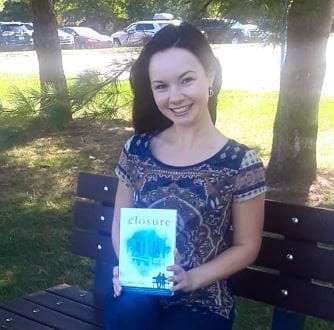
Lindsey Todd is a Master of Arts student at Dartmouth College, and the published author of Catholic novel Closure (available online and in Barnes & Noble stores). In her free time, she enjoys traveling, singing, hiking, literature across genres, and exercising. She has a special devotion to the Blessed Sacrament, and a great affinity for St. Joan of Arc and St. Pope John Paul II. Lindsey is passionate about sharing the beauty of chastity with others, particularly as a Catholic writer. Her self-help book about pure dating relationships, Freedom to Love, is available on Amazon and Kindle, and has been endorsed by Jason Evert and Pam Stenzel. You can follow Lindsey’s author account on Instagram: @veritaswords, and learn more about her work at www.lindseytodd.net.

Filed Under: Dating

January 31, 2020 By Lindsey Todd

I Will Wait for You

When I first began exploring the area of Catholic moral teaching that is chastity—not only implementing it, but also internalizing it—I couldn’t get my hands on enough material. I discovered I absolutely loved reading books that deepened my understanding of something so good; that I loved connecting with other young adults to hear their dating stories and to share my testimony with them; that I loved the person that practicing chastity made me. I loved and deeply valued the newfound understanding I’d gleaned of authentic love as a result of studying chastity. I was ready and willing to wait for my future husband’s body.

…Not so much for him, though.

Now that summer’s here, I’ve begun taking frequent drives to the shore, often alone and always with my windows down and music blasting. When I arrive, I spread out my blanket, dig out a book and my rosary, and “spend the day with Jesus” as I’ve come to affectionately think of it. People are always shocked to learn that I go to so many places and take trips on my own—especially to the beach. I go because the more time I spend alone, the more Jesus seems to reveal to me in those solitary and quiet moments. He can only speak so loudly when I’m conversing with someone else.

During my last solitary trip to the beach, Jesus revealed something new to me about chastity, and about my longing for my vocation: chastity not only depends on our willingness to wait for a person’s body, but on our willingness to wait for them, as a whole person. To wait on their presence; to wait on their being when we have no idea where they are, or whether they’ll actually show up one day. For the past three years, I believed I’d learned everything there was to know about chastity, but here God is again, proving me wrong and humbling me with His assertion that there is a more perfect understanding of love as He created it.

I can be a very impatient person, so waiting for my future spouse to show up has proven exceptionally challenging. Since my last long-term relationship ended a few years ago, I unconsciously set a limit on the amount of time I was willing to be single, and when that period drew to a close, I found myself angry and frustrated with God. I began asking Him things like, “What have I not given to you that you still need me to surrender so that I’m worthy of my vocation?” and, “Are you punishing me for sins I confessed so long ago?” and especially, “Have you forgotten me?”

It wasn’t until a few days ago that I realized for the first time that in the midst of my impatience, I’ve been failing to practice true chastity—not in a way that’s sinful or immoral, but in a way where my attitude isn’t conducive to true love. In order for true love to exist, chastity (and patience) must always be practiced between lovers, so who am I to set limits on how long I should have to wait for the one God has planned for me? And who am I to demand anything of God, at all?

Upon coming to this realization, I’ve decided to go on a month-long dating fast. While this might not seem like a long period of time, the point is less to fast from actual dating and more to give my heart wholly and completely to God without secretly wishing I could give all of it to someone else. If you’re struggling with a strong desire for your own vocation, I encourage you to also spend time in prayer, reflecting on what God might actually want for you rather than praying constantly for what you think God owes you. He already knows the desires of your heart, so you don’t have to harp on them each time you pray, because He’s already taking care of it for you.

Chastity is so much more than abstaining from sex, friends. It’s about anticipating the love that God has promised to each of us, whatever our vocation… if only we are willing to wait.

____________________

Lindsey Todd is a Master of Arts student at Dartmouth College, and is building her career as a novelist. In her free time, she enjoys traveling, singing, hiking, literature across genres, and exercising. She has a special devotion to the Blessed Sacrament, and a great affinity for St. Joan of Arc and St. Pope John Paul II. Lindsey is passionate about sharing the beauty of chastity with others, particularly as a Catholic writer. Her book about pure dating relationships, Freedom to Love, is available on Amazon and Kindle, and has been endorsed by Jason Evert and Pam Stenzel. Lindsey currently resides in New Hampshire with her Shiba Inu pup, Mazie. You can learn more about her work at www.lindseytodd.net. Check out her book, Freedom to Love, to learn more about God’s design for the authentic love He’s destined for you.”

Filed Under: Dating

April 23, 2019 By Lindsey Todd Leave a Comment

Fifteen

Fifteen

There is a Taylor Swift song called “Fifteen” that contains a lyric that deeply resonates with me:

“In your life, you’ll do things greater than dating the boy on the football team. I didn’t know it at fifteen.”

Twenty-five used to feel old to me. Now, looking back, I understand that 25 isn’t old—rather, 15 is young. My teenage readers: don’t misunderstand; I am not calling you immature. However, at fifteen, or at sixteen or seventeen, hindsight doesn’t exist, making it all too easy to live in the moment and much more difficult to see the bigger picture.

When I think about the person I was at 15, my mind immediately flashes to icy bleachers on late November evenings, scanning a football field for the first and only boy I ever really loved, and my heart goes out to that young girl who knew so little about her identity. At 15, my feelings for that boy were so central to who I was. How he felt about me, how I felt when I was with him, what we would become—all of this absolutely consumed me, taking precedence over my identity as a daughter of God.

In our teenage years, even if we might love God because we were raised to love Him, He is often so far from our minds that He becomes an afterthought. Extracurriculars, studying for AP tests, dress shopping for formals, and Friday night movie dates make up nearly the entire pie chart of our brains in high school, leaving behind only a small sliver for faith. For me, dating someone seriously as a teenager clouded my judgment and made me so love-fogged that it became impossible to make sound decisions rooted in faith, because all I really wanted was to give my then-boyfriend everything he wanted. I wanted to put him first. In a sense, it’s precisely because of that selflessness that I know I loved him as well as I possibly could at the time—love demands that we prioritize somebody else’s needs over our own. However, love will never demand that we compromise our identity for another person, which is what typically occurs in most young relationships. As a result of not yet knowing who you are, you become a version of yourself with somebody else that you might not have consciously chosen.

High school readers: I’m not telling you not to date, but I do urge you to consider postponing exclusive dating until you’re in college, with a little more understanding of who you are and what you believe outside of another person. Loving someone so deeply has been the most meaningful experience of my life, and that love originated in my high school years—in many ways, I probably needed that experience to fully understand and embrace all of the beliefs I’m passionate about today. Still, that relationship set me on a path that led away from my faith, and resulted in many years of compromising who I wanted to be so that I could be more palatable to my boyfriend. He was, and is, one of the best men I’ve ever known, but we grew into people with very different priorities that couldn’t be reconciled. What followed was the difficult and painful decision to end a six-year relationship with someone I once thought I’d marry.

Teens: know that who you’re becoming as a result of your own dreams and beliefs is so much more significant than who you are as somebody’s boyfriend or girlfriend. Save the part of yourself that wants to give everything to somebody for the years when it’s actually possible and healthy to do so; when marriage will actually be an attainable and real option. Don’t ignore or fear the electrical currents that run beneath your skin when he or she holds your hand—“sparks” are a God-given gift that stem from our humanity—but understand that your worth is far superior to a feeling. These are your years to be selfish with your identity; your dreams; your virtue, for it is in this “selfishness” that you will grow into the most selfless individuals who are fully ready and capable to give themselves to the right person.

(Check out my book, Freedom to Love, to learn more about God’s design for the authentic love He’s destined for you.”)

___________________________

Lindsey Todd graduated from West Chester University in 2016 with a B.A. in English, and currently works as a technical writer for Mars, Inc. In her free time, she enjoys traveling, singing, playing with her dog, reading, and exercising. She also loves art, fashion, and deep political and theological discussion. She has a special devotion to the Blessed Sacrament and a special love for St. Pope John Paul II. Lindsey is passionate about sharing the beauty of chastity with others, particularly as a Catholic writer. Her book about pure dating relationships, Freedom to Love, is now available on Amazon, Kindle, and the FORMED platform for digital Catholic media. Lindsey currently resides in Bucks County, Pennsylvania. You can learn more about her work at www.lindseytodd.net.

 

Filed Under: Dating

February 22, 2019 By Lindsey Todd 4 Comments

Never Mine to Begin With

One of the earliest memories I have is being about four years old in the drugstore with my dad. I remember ogling the rows of candy featured at the check-out counter before my eyes settled on a roll of Spree, and I asked my dad if we could get one. That time—for whatever reason – his answer was no, but little Lindsey was hell-bent on getting the candy she wanted. Naturally, her next move was to tuck it up the leg of her green, corduroy pants and hobble out of the store after him.

If you’re wondering how the story ends, my dad noticed that I was walking to the car like a pigeon-toed penguin, discovered the roll of Spree, and returned it. It was the first and only time I’d ever taken anything that didn’t belong to me, but it wouldn’t be the last time I willfully insisted on having what I wanted, even if it wasn’t mine. Some people are more likely than others to surrender under the force of unfavorable circumstance; the rest of us stubbornly insist on holding out for the desired end goal. I tend to fall into the latter category in all aspects of my life—even in the context of my faith.

While I feel I’ve made great progress in this area, I continue to find it a true challenge to surrender the things I believe I want to God’s greater plan. More recently, it’s been challenging to surrender people in my life to God. Losing friends, significant others, or family is always painful, but sometimes, losing the future you built in your head can be even more painful. We often grab onto people, ideas, or things that may not necessarily be meant for us because we want, so badly, to possess whatever will make us temporarily happy, and when we fail to obtain those people or things that satisfy us right now, it’s easy to focus on the holes these losses leave behind.

As I grapple with these “holes” in my life, I’m learning that I don’t actually want what I think I want unless God wants it for me. We can only grasp at the things we believe might be good for us, but we can’t ultimately force something that falls outside of God’s plan. If we insist on our own shortsighted desires, we risk long-term unhappiness as we cling to things that were never meant for us. It is  quite possible that we are missing out on the things that were always ours in favor of an inferior result.

Does everyone enjoy candy? Duh (okay, well – most of us do). Would a child eat sweets morning, noon, and night if their parents didn’t insist on healthy food? Absolutely. But what would follow would be disastrous for the child’s health and wellbeing.  They’d miss out on what they need for nourishment and growth in favor of something sweet, but ultimately empty and unsatisfying. God is the parent, and we are the stubborn children who often prefer that empty candy to nourishing food because we want our desires satiated instantly rather than in God’s time. We don’t want to wait for what is good for us—we’d rather have it now. This mentality, however, is one that must be conquered, because the things that God has in mind for us will satisfy our unique purposes in ways we can only begin to imagine.

If you are clinging to someone or something that takes much effort to maintain, or if you are grieving a failed relationship or dream, I need you to hear that it was never yours. That doesn’t mean that the person or goal itself was bad, but that you’ve simply lost what was never yours. God works for our good in the choices we make, but when we choose wrong, He usually has a way of rectifying this by removing people or things from our lives. These little (or large) losses will always hurt, but if we continue to trust in the Person who knows us better than we know ourselves, He will replace these losses with beautiful things: “And we know that in all things, God works for the good of those who love Him” (Romans 8:28).

Cut your losses and trust in God’s plans, for “there are far better things ahead than any we leave behind” (C.S. Lewis).

Also, kids: stealing is bad.

(Check out my book, Freedom to Love, to learn more about God’s design for the authentic love He’s destined for you.)

_______________________

Lindsey Todd graduated from West Chester University in 2016 with a B.A. in English, and currently works as a technical writer for Mars, Inc. In her free time, she enjoys traveling, singing, playing with her dog, reading, and exercising. She also loves art, fashion, and deep political and theological discussion. She has a special devotion to the Blessed Sacrament and a special love for St. Pope John Paul II. Lindsey is passionate about sharing the beauty of chastity with others, particularly as a Catholic writer. Her book about pure dating relationships, Freedom to Love, is now available on Amazon, Kindle, and the FORMED platform for digital Catholic media. Lindsey currently resides in Bucks County, Pennsylvania. You can learn more about her work at www.lindseytodd.net.

 

Filed Under: Dating

August 20, 2018 By Lindsey Todd

The Myth of Passive Dating

I’m probably not the only single Catholic who’s read the Book of Tobit and swooned over the notion that God has set someone apart for me since the beginning of creation. Obviously, when Tobiah married his wife, it was God’s will for this union to take place, as evidenced by the Archangel Raphael’s words to Tobiah: “Do not be afraid, for she was set apart for you before the world existed. You will save her, and she will go with you” (Tobit 6:18).

What a romantic idea – that God has one specific person in mind for each of us who he calls to the vocation of marriage. I’ve relied on this hope for a long time, banking on the fact that God will lead me to my husband when the time is right. I’ve always assumed I was destined to be with one man, and that if I just prayed hard enough, he would eventually be “revealed” to me.

In many ways, this mentality takes some pressure off actively dating. It allows many of us who believe in destiny to fall back on the idea that, no matter what, God will lead us to the perfect person when the time comes for marriage. In your head, this may look something like a scene from a movie, where Mr. or Mrs. Right shows up out of nowhere one day at your front door, or at the very least, bumps into you with their grocery cart at the store (or, even better, in the confession line).

Recently, it’s been a hard pill for me to swallow that destiny may not exist in the exact form I thought it did. This is because, while God expects us to make good choices when it comes to dating and marriage, He does not choose our spousesfor us. He, in all His infinite wisdom, knows with whom we will ultimately share our lives—but that choice is ours because of our free will. What this means is that we have to kick ourselves into gear when it comes to actively dating rather than passively waiting for the right person to stumble across our path.

Let’s be real: putting ourselves out there is hard. Even more, putting myself out there as a woman is hard, because men seem to lack the courage to approach the women they’d like to date, as was done traditionally. Today, many young men  opt to take a back seat when it comes to dating, waiting for the right situation or moment to present itself in order to expose themselves to less risk of rejection. This means that women now need to be even more forward than they’d like to be when it comes to expressing interest in men. If neither party takes a risk, than both parties risk losing the reward of a fulfilling relationship.

There are more single people today than ever before in U.S. history, with singles outnumbering married people by over 50%. The scary part is that many of these singles are mature, good people who are called to marriage and long for it, yet remain passive when it comes to dating. I am convinced that passivity is the enemy of finding and nurturing strong relationships, because sitting back and waiting for things to happen to you seldom brings desirable results when it comes toanything.

For our young Catholic population, what does this mean? It means, ladies and gents, that we both need to actively pursue the people we are interested in. If you feel called to marriage, don’t waste years of your life waiting for the right person to simply fall into your lap as a result of prayer. Sometimes, this happens, but more often, we need to go out and seek what we want. If finding a Catholic spouse in particular is your dream, then “actively seeking” may mean attending more Catholic young adult events each month, staying after Mass to make new connections and socialize, etc. God will work through your actions and decisions to help you find a good spouse.

…Remember that the only person who ever woke up and found their spouse sitting right beside them was Adam!

(Check out my book, Freedom to Love, to learn more about God’s design for the authentic love He’s destined for you.)

____________________________

Lindsey Todd graduated from West Chester University in 2016 with a B.A. in English, and currently works as a technical writer for a Fortune 500 company. In her free time, she enjoys creative writing, singing, playing with her dog, reading, and exercising. She also loves art, fashion, and deep political and theological discussion. She has a special devotion to the Blessed Sacrament and a special love for St. Pope John Paul II. Lindsey is passionate about sharing the beauty of pure love with others, particularly as a Catholic writer and as a retreat leader for young women. She currently resides in Bucks County, Pennsylvania with her family.

Filed Under: Dating, Finding Love, Singleness

June 5, 2018 By Lindsey Todd

My body, given for you

Recently, I’ve found myself discouraged over the realization that many young Catholics view sex as something shameful. In fact, I have struggled with personal feelings of guilt over my longing for physical intimacy, attempting to stifle these desires despite the fact that they are natural. Of course, it is necessary to understand that pre-marital sex is always wrong, even if the consequences aren’t immediate. However, it is equally important to understand that this ache for communion is actually holy, and it wasn’t until meditating on the final Luminous Mystery of the Rosary recently—The Institution of the Eucharist—that this occurred to me.

Before Jesus entered into His Passion, He left behind a great gift: the Eucharist. While He did this to leave us with a means of remembering Him, He more importantly craved physical unity with us. In fact, He wanted our union with Him to be so perfect—so complete—that He not only gave us His body on the cross, but gives us His Body each time we receive Him in the Eucharist.

Many of us have been born and raised in our faith, and may not think twice about receiving the Eucharist. It may be something we simply do out of habit. What we’re failing to realize in this type of lifeless resignation, however, is that this attitude is comparable to receiving a lover with no passion or fervor, because the Eucharist is an expression of physical love—as is the one-flesh union of a husband and wife. Receiving Jesus in the Eucharist is the closest we can be to Him on this Earth, and it is through intimacy that we become the closest we can be to another person.

God so craved this perfect communion for us that He designed us to fit together like puzzle pieces—sex is that important, that good, and that necessary, not only for our hearts and souls but for the good of creation. There is a reason why people associate sex with love, even in disordered situations, and a reason why sex can be addictive and all-consuming: because God designed us to crave intimacy.

Because intimacy is holy, neither receiving the Eucharist, nor entering into intimacy with another person, come without conditions, as they require formal sacraments to be deemed good and appropriate. A non-Catholic cannot receive the Eucharist without being baptized, and then going on to prepare for their First Communion. He or she needs to enter into this communion with God with their whole heart, and to educate and prepare themselves properly in advance.

Likewise, we cannot enter into half-hearted unions with each other. We must give all of ourselves to another person before engaging in intimacy, and this total self-giving can only be achieved through the sacrament of marriage. Chastity does not exist to stifle love; rather, it encourages authentic love by insisting upon the correct conditions for intimacy.

Before we receive the Eucharist, it is necessary to examine our consciences and confess any mortal sins, which are detrimental to our relationship with God and inhibit us from entering into perfect communion with Him. This is why it is a sacrilege to receive the Eucharist in a state of mortal sin: we are attempting intimacy with God after we have mortally hurt Him, and before we have sought forgiveness.

Similarly, if we truly love someone, intimacy not only comes after marriage, but also under the appropriate circumstances within the sacrament. Sex is an expression of feelings of tenderness and romance, along with the desire or willingness to procreate. It wouldn’t make sense from the perspective of authentic love to enter into intimacy with selfish intent. Any negative feelings between spouses should be resolved beforehand, and both parties must be open to the prospect of life. If not, intimacy becomes about selfish pleasure rather than love.

Ultimately, intimacy in and of itself is always good, but as imperfect human beings, we sometimes use it in a way that is sinful and immoral. However, if we fully understand how wonderful and holy sex is, the same way we acknowledge the sacredness of the Eucharist, we are more likely to treat it as the great gift that it is: the perfect expression of our love for another person, and always worth the wait.

____________________________

Lindsey Todd graduated from West Chester University in 2016 with a B.A. in English, and currently works as a technical writer for a Fortune 500 company. In her free time, she enjoys creative writing, singing, playing with her dog, reading, and exercising. She also loves art, fashion, and deep political and theological discussion. She has a special devotion to the Blessed Sacrament and a special love for St. Pope John Paul II. Lindsey is passionate about sharing the beauty of pure love with others, particularly as a Catholic writer and as a retreat leader for young women. She currently resides in Bucks County, Pennsylvania with her family.

Filed Under: Dating, Engagement, Marriage, Marriage & Family

February 8, 2018 By Lindsey Todd

Let Go and Let God

You may have a picture in your head of your ideal future – a dream of the way you would like your life to go. This may involve a spouse, a dog, six children, and a white picket fence, or it may look more to you like a life spent deep in prayer and service, or even in total isolation in a monastery or abbey.

Whatever your dream is, these are likely the images that pull on your heart, and are often a motivation for prayer and action. These dreams of things to come are good, wholesome, and beautiful, and are usually put on your heart by your Maker. But what if some of those dreams are so consuming that you’re  overlooking what God might actually want for you?

As a Catholic, one of the most important matters you can reflect upon is your vocation, which will ultimately set the course for the rest of your life. Accepting God’s plan may require an alteration of your dreams and ambitions, because when you know your vocation, it will become the single most important thing in your life. A vocation is different from a career or a profession. Rather, it is the reason for which you have been born, and the reason why God designed you the way He did. Not intimidating at all, right?

If you’re a control freak, like me, you might be thinking, But I already know what I want. Isn’t that proof that my dream is my calling? 

Yes…but maybe no. I will tell you that the only thing I’ve ever wanted consistently throughout my life is marriage. I’ve romanticized love from the time I was a little girl, and my passion for it only grew when I lived my first real taste of it over the course of a six-year relationship. However, the caveat about romantic love is that it is very easy to get wrapped up in it to the point that everything else becomes secondary – including your identity in Christ. Romantic love is, no doubt, wonderful, but it is God who should be at the center of your life. Perhaps before you are capable of fully understanding this – before you learn to put human love in its proper place – God has other plans for you.

In my own life, God continues to make me wait for the one thing I’ve always wanted most. It got to the point, a few months back, where I actually found myself in a bathroom stall at midnight in a city hundreds of miles away from home, tears streaming down my face as I thought out loud to God: This is hurting me. It is hurting me to wait for my husband. 

Looking back on that experience – despite the fact that it only happened three months ago – I realize that God has been preparing me. Maybe it’s for marriage, or maybe it’s for several more years on my own. Maybe it’s for a life of singleness or service. The fact is, I don’t know what God wants for me, yet. I only know that my heart still yearns to be joined in perfect communion with another person’s. However, I also know that I am willing to go wherever God leads me, so that I can reach all that His love orders for me. He created me for a purpose, and I will chase after that purpose until I’ve found it.

Similarly, He created you for a specific purpose, and He will guide you to it and reveal it when the time is right – but only if you are open to His divine will. Being open doesn’t have to mean that you’re in love with the idea of singleness, or service, or anything else that sounds less than appealing, right now. It just means that you have to let go of your chokehold on what you believe you want, in order to be open to whatever God is trying to put on your heart.

No matter what your calling may be, you were created for sainthood. For holiness. For perfect communion with God, and with others. Don’t be discouraged if you’re still trying to figure out God’s plan for your life. Simply stand still, and let Him move.

___________________________________

Lindsey Todd graduated from West Chester University in 2016 with a B.A. in English, and currently works as a technical writer for Mars, Inc. In her free time, she enjoys creative writing, singing, playing with her dog, reading, and exercising. She also loves art, fashion, and deep political and theological discussion. She has a special devotion to the Blessed Sacrament and a special love for St. Pope John Paul II. Lindsey is passionate about sharing the beauty of pure love with others, particularly as a Catholic writer. You can learn more about her work at www.lindseytodd.net. Lindsey currently resides in Bucks County, Pennsylvania with her family.

Filed Under: Dating, Breaking Up, Singleness

November 8, 2017 By Lindsey Todd

Worth More Than 2 AM Texts

It is an unfortunate reality that we live in a society that sexualizes everything and glorifies instant gratification. The upside, however, is that many young, single Catholics continue to actively strive for chastity and understand why it is necessary. We have heard so many amazing accounts of what it means to give and receive authentic love, and we are always able to look to our Creator for the ultimate example of what it means to sacrifice all for the sake of true, uninhibited love.

Once I’d reached a point in my life where I felt that I’d mastered physical chastity, I’d assumed it was a virtue I could simply cross—on to the next virtue! But the beautiful thing I’m discovering about the Catholic faith is that you’re never really done learning about it, whether you’ve been Catholic for a short time or have been living the faith your whole life.

Over the last year, I read the book Emotional Virtue by Sarah Swafford, and it opened my eyes to so many aspects of chaste dating that I hadn’t considered before. Chastity is about so much more than just remaining pure physically. Rather, it calls us to love so radically and deeply that we are forced to put all of our own desires aside, making way for the good of another before all else. With the truly chaste mindset established, we are able to not only focus on mastering our carnal passions, but to analyze our intentions in our relationships with the opposite sex.

In the age of texting, IMing, and Facebook, it can be all too easy to shoot off a message to someone that doesn’t necessarily mean anything beyond the fact that it can be a nice distraction from loneliness or heartbreak. Sometimes, “meaningless” conversation to one person means something very different to the person with whom they are speaking. It is impure of heart to mislead someone simply because their conversation, or company, acts as a temporary bandage for the emotional wounds we might be trying to heal, or because their attention may be a bit of an ego boost.

There is absolutely nothing wrong with being friends with a person of the opposite sex, but the type of relationship should always be very clearly defined and apparent in its nature to both parties. Meeting for a casual lunch is one thing; a phone call at 2 a.m. is another. Joking and friendly banter are fine; flirtatious remarks and deep conversations about love and shared wishes may cross the line, unless the intent is to establish a romantic relationship.

Every friendship is different, and what might be natural, normal behavior for some friends might be misleading and end in heartbreak for others. The key is to figure out what is most appropriate and clear for your own friendships, so that your words and behavior aren’t misinterpreted to mean more than what is intended.

Sure, it might feel good to “harmlessly” flirt, and it might feel good to receive attention from someone even if you’re not necessarily interested in them, but what is always good to consider is how you would feel if you were on the other person’s side of things. Would you want to be led on? Would you want to waste your time on someone who wasn’t interested in you? In the event that you believe a friend feels more for you than you feel for them, it is your obligation to be honest with them, even if it might hurt the friendship. Christ tells us that in order to truly love others, we must be honest with them.

If we mislead another person with blurry lines of friendship—making them feel that the potential for something more might exist if it does not—we do them the dishonor of taking advantage of any feelings they may have for us simply to feed our own pride. That isn’t love. It is use—and the people we call friends deserve more than that.

The next time you are tempted to pick up your phone and pour your heart out to a friend of the opposite sex at 2 a.m., ask yourself what your reasons and intentions are. Ask yourself what you are seeking from the conversation. If you suspect that your motives are anything less than pure, resist the temptation to reach out to that person. You are called to holiness, and holiness always demands perfect love—physically, and emotionally.

_________________________________________
Lindsey Todd graduated from West Chester University in 2016 with a B.A. in English, and currently works as a technical writer for Mars, Inc. In her free time, she enjoys creative writing, singing, playing with her dog, reading, and exercising. She also loves art, fashion, and deep political and theological discussion. She has a special devotion to the Blessed Sacrament and a special love for St. Pope John Paul II. Lindsey is passionate about sharing the beauty of pure love with others, particularly as a Catholic writer and as a retreat leader for young women. She currently resides in Bucks County, Pennsylvania with her family.

Filed Under: Dating, How Far is Too Far?

October 16, 2017 By Lindsey Todd

God, what are you waiting for?

I am blessed to be able to go to Adoration every day during my lunch break, as my office is right up the street from my church. I got into this habit last summer, when I was making some pretty significant changes in my life and often felt overwhelmed by these developments. My church, along with the Blessed Sacrament, has been my escape—my respite from the world—for about a year and a half, now.

Recently, I’ve begun noticing something about my time spent in Adoration: I’m always listening for footsteps. Every day, I claim the same pew in the very front. And as I’m kneeling there talking to God, my ears perk up as I notice the sound of the back-door opening; as I hear the sound of shoes on the marble floor. And sometimes, I’ll allow myself to look back.

Naturally, it’s almost always an elderly person, or a mother with her children. I don’t feel disappointment anymore when this is the case, but there is a part of me that hopes the footsteps will stop right at my pew; that I’ll finally come face to face with the man that God has been preparing for me.

I know that this is about as realistic of a dream as a unicorn entering the church, but I can’t stop myself from hoping that my husband and I will find each other one of these days. Honestly, I can’t even count the number of novenas I’ve said, the number of rosaries and Masses I’ve offered, for God to put that person in my life.

When we feel strongly called to a certain vocation, it can be all-consuming. It is particularly challenging to be called to married life, because until you find that person, it may feel as though all you can do in the meantime is wait. Arguably, waiting is one of the hardest things we will ever have to do, because when we really want something, it is only natural to want to be proactive about obtaining that thing or achieving that goal.

The thing about waiting for our future spouses is that, rather than relying upon our own resources to get the love we desire, we are completely dependent upon God’s plan for our lives during this time spent in preparation. Of course, there are steps we can and should take to meet our future spouses if marriage is the vocation to which we feel called—it is important to put ourselves out there; to make good friends who affirm us in the faith; to do the things we love now in order to build up God’s kingdom, and to reach our full potential as His sons or daughters. Still, when we meet our future spouses is totally in God’s hands and is, ultimately, a huge test of faith.

In our society, it often feels as though there is a shortage of faithful, young Catholics. The pool in which we are searching for our future husbands or wives is so small, and I often find myself wondering, Do I even stand a chance of finding him? Sometimes, I wonder whether my many prayers for this intention are even heard, because it feels as though I’ve been waiting and searching forever, when in reality, it’s only been a short amount of time. I think an important point to remember, though, is that throughout history, God has richly rewarded the people who’ve waited on His timing. Just when we are about to give up—just when we reach our breaking point—God grants us the very thing we’ve been longing for. He knows and hears every desire on our hearts, for He is the one who put those desires there.

If God is making you wait for the love you are longing for, know that it is probably necessary for reasons you can’t yet understand. When being alone feels overwhelming and exhausting, turn to Jesus and the Blessed Mother, and ask them to equip you with the graces you need for this state in your life. If you are still searching for the right person, it is because God is not yet through with the plans He has for you as a single man or woman!

I will probably continue to listen for those footsteps in Adoration, but I will do so with the knowledge that God has a plan for me—and that it is much greater and better than anything I could imagine for myself.

_____________________

Lindsey Todd graduated from West Chester University in 2016 with a B.A. in English, and currently works as a technical writer for Mars, Inc. In her free time, she enjoys creative writing, singing, playing with her dog, reading, and exercising. She also loves art, fashion, and deep political and theological discussion. She has a special devotion to the Blessed Sacrament and a special love for St. Pope John Paul II. Lindsey is passionate about sharing the beauty of pure love with others, particularly as a Catholic writer and as a retreat leader for young women. She currently resides in Bucks County, Pennsylvania with her family.

Filed Under: Dating, Singleness

September 25, 2017 By Lindsey Todd

If You Love Someone, Let Them Go

I remember reading a quote in my early teen years that moved me back then and resonates with me, today: “If you love someone, let them go. If they return, they were always yours. If they don’t, they never were.”

I don’t know how much truth applies to this saying, but in my own life, I have experienced making the tough decision of letting go of the one person I’ve ever loved romantically, and it remains to this day the single hardest decision I have ever made. Still, I knew it was necessary at the time, and I’ve never regretted that decision, because I know I let him go for the very reason that I did truly love him. Throughout the duration of our 6-year relationship, we were never entirely chaste, and I finally reached a point where I knew I had to choose to love fully—to love God fully, my boyfriend fully, and myself fully—and give that relationship up.

Our society views love through a very different lens than the one I have just described. We are told that to love someone romantically, we must give all of ourselves to them—physically—before marriage. It is the norm to sleep together and move in together before making a lifelong commitment to that person before God. It is the norm to focus on the rush of feelings that generally goes along with being “in love,” rather than on the person those feelings are directed toward. In short, love has become an “all about me” mentality, focusing on the “I” rather than on “you.” The question becomes, “What can I get out of this person/relationship?” Rather than, “What can I give to this person/this relationship?”

Chastity is demanded of us by our Creator for good reason: it is the only way in which we are able to even begin to love another person perfectly. When chastity becomes a lifestyle for those of us awaiting marriage, we are not only free to love others based upon who they truly are, but we are free to love God and ourselves the way we are called to. Love requires that we put the good of the other person before our own needs and desires, and that type of selflessness can only be achieved through pure relationships. Chastity is the surest way to evaluate whether true love exists in a relationship.

There are many young couples today living in a permanent state of brokenness because they feel trapped by the very person to whom they’ve given everything, despite the fact that they may be wrong for each other. It is absolutely terrifying to consider ending a relationship after you’ve invested so much of yourself—physically and emotionally. In fact, ending a sexually active relationship can feel a lot like divorce, depending upon whether the couple lived together or how much time they spent together. Still, the hurt that is likely to result from ending things with the wrong person will ultimately free you to a life of wholeness and authentic love if you choose to pursue chastity going forward. God is the master of taking our pain and using it for a beautiful purpose, even if at first the purpose isn’t clear.

I still love my ex-boyfriend, even though we broke up over a year ago. In fact, I would go so far as to say that I love him more and better, now because I made that tough decision to love him the way God demanded that I love him, and I ultimately accomplished that in letting him go. I’ve never stopped cheering for him from the sidelines through prayer and unspoken well-wishes. Loving someone might sometimes mean that you have to love them from a distance, even if it’s one of the hardest decisions you’ll ever make.

If you love someone—truly love them—and you know in your heart that God is calling you to a more perfect love, then let them go. God will be there to catch you when you do. And if you let Him, He will open the most beautiful doors for you through your simple “yes” to His plans for your life.

_____________________

Lindsey Todd graduated from West Chester University in 2016 with a B.A. in English, and currently works as a technical writer for Mars, Inc. In her free time, she enjoys creative writing, singing, playing with her dog, reading, and exercising. She also loves art, fashion, and deep political and theological discussion. She has a special devotion to the Blessed Sacrament and a special love for St. Pope John Paul II. Lindsey is passionate about sharing the beauty of pure love with others, particularly as a Catholic writer and as a retreat leader for young women. She currently resides in Bucks County, Pennsylvania with her family.

Filed Under: Dating, Breaking Up

September 14, 2017 By Lindsey Todd

The Corrosion of Courtship: Defeminization and Emasculation

A few nights ago, I was curled up on the couch scrolling through Pinterest as my mom watched reruns of The Pacific, a TV series that follows the lives of soldiers who fought in World War II. In this episode, one of the soldiers, dressed in uniform, walked over to the house next door and proceeded to ask his love interest on a date. He was straightforward and totally confident in his pursuit of her. And I found myself lamenting, “I wish I had been born in that generation.”

These days, we are living in an age where many men don’t act like men and many women don’t act like women. In fact, men in particular are chastised if they act too much like a man. Their masculinity is labeled “toxic”—something for which they must apologize.

It shouldn’t be necessary for me to emphasize that I’d like to meet and marry a masculine man when I explain my taste in men to others, yet this is what it has come to. In my experience, men are sadly not masculine—at least, not the way they were in my grandfather’s day. Men are no longer encouraged to hold doors, help women into their coats, pick women up or drop them off at their homes, or walk on the outside of the sidewalk. In fact, they are discouraged from these displays of chivalry, because our society has bought into the lie that chivalry implies that women are incapable of taking care of themselves. And therein lies the root from which emasculation has stemmed: women are no longer encouraged to be feminine, because true femininity has been deemed archaic and insignificant.

I would consider myself to be an independent woman. I have been in the corporate world for a little over a year, and am used to either going out with my friends or simply by myself with only a Steinbeck novel for company, because I’d rather genuinely enjoy the company I keep than go out with someone I’m not interested in simply for the sake of dating.

Despite my independent streak, I am about as feminine as can be, from my bi-weekly manicure touch-ups to the way I weep every time I watch the live action version of Beauty and the Beast (of course, feminine traits vary among women). I expect a man to pick me up when he asks me out, and to come to my door rather than text me from the car when he arrives at my house. Why? Because these behaviors demonstrate respect.

Feminism has been grossly distorted to suggest that a woman must become more like a man in order to be successful, while a man must become less masculine in order to enable female “empowerment,” which encompasses everything from getting ahead in the workforce to taking an innocent life. Some aspects of female empowerment might stem from noble objectives. Most, however, insinuate that a woman has the right to do whatever she wants, whenever she wants—even at the expense of another person.

We need to re-establish the roles of men and women in our society and in our relationships, because our natural inclinations are complementary, and lend themselves to the most amazing romances that have presently been reduced to something we only read about in books. True masculinity and femininity acknowledge the truth of their complementary natures, and do not seek to detract from what comes organically to the opposite sex. We each possess unique tendencies that bring out the best in the other, and each needs to play his or her role as God intended.

No matter what anyone tells you, men: hold doors. Pick her up, and be on time. Protect her, and protect her virtue fiercely. Women: let yourselves be taken care of. Enjoy feeling delicate, cherished, and sought after. Christ pursued His bride, the Church, all the way to Cavalry, where He died for her good. He demands: “Wives, submit yourselves to your own husbands as you do to the Lord…Husbands, love your wives, just as Christ loved the church and gave Himself up for her to make her holy” (Ephesians 5:22; 5:25-26).

Rest in the knowledge that this was God’s intent for men and women from the beginning of time, and that in embracing your God-given masculinity or femininity, you are adhering to His perfect design for your love story.

____________________________

Lindsey Todd graduated from West Chester University in 2016 with a B.A. in English, and currently works as a technical writer for a Fortune 500 company. In her free time, she enjoys creative writing, singing, playing with her dog, reading, and exercising. She also loves art, fashion, and deep political and theological discussion. She has a special devotion to the Blessed Sacrament and a special love for St. Pope John Paul II. Lindsey is passionate about sharing the beauty of pure love with others, particularly as a Catholic writer and as a retreat leader for young women. She currently resides in Bucks County, Pennsylvania with her family.

Filed Under: Dating

Footer

  • About
  • BOOK AN EVENT
  • LAUNCH A PROJECT
  • STORE
  • Podcast

JOIN OUR NEWSLETTER

© 2026 Chastity Project | Designed by Fuzati

Subscribe to Our Podcast

Listen as Jason interviews special guests and delivers straight answers to tough questions submitted by the listeners on dating, singleness, marriage, and sexuality.
subscribe now
  • About
  • BOOK AN EVENT
  • LAUNCH A PROJECT
  • STORE
  • Podcast

JOIN OUR NEWSLETTER

© 2026 Chastity Project | Designed by Fuzati
Join the Revolution


What if marriage preparation started a decade before the wedding?

Chastity Project is launching our boldest initiative ever!

JOIN THE REVOLUTION


GET ANSWERS
  • DATING
  • LGBTQ
  • MARRIAGE & FAMILY
  • BIRTH CONTROL & STDS
  • PORN
  • STARTING OVER
  • join
  • GET answers
    • DATING
    • Marriage & Family
    • Porn, etc.
    • LGBTQ
    • Birth Control & STDs
    • Starting Over
    • Italiano
    • Español
    • Português
  • Courses
  • Store
    • Bulk
    • Books
    • Audiobooks
    • Booklets
    • CDs
    • DVDs
    • Curriculum
    • Commitment Cards, etc
    • App
  • Events
    • All Events
    • JP2 Trails Retreats
    • Purified
    • SPEAKERS
    • VIRTUAL SEMINARS
  • Donate
  • listen to the podcast
listen to the podcast